Director's Letter — Giving the Tin Man a Heart
Featured Exhibitions
Collection Galleries & Ongoing Exhibitions
The Collection
Recent Acquisitions
Collection Spotlight — Virgil Ortiz
Research Initiatives Within Public Engagement & Learning
Student Leadership at WAM: WAM Collective & Student Guides
Truth & Repair at WAM: Native American Artist-in-Residence Program
By the Numbers
Financials
FY25 Donors & CAB

Giving the Tin Man a Heart
A Letter from the Director
This has been a year of leaning into our mission to make a home for inclusive arts experiences that broaden understanding of ourselves and our world. It has been a year of sharing histories and experiences through art that help make absent narratives visible, partnering in research that delves deeply into the intersections of wellness and creativity, and inviting scholars, students, and artists into conversation about the many ways art transforms our understanding of ourselves and each other.
At the center of the Weisman’s mission is a commitment to do the work of care. Our mandate of care extends to the art we hold, our remarkable building, and, most importantly, to our people: the artists, students, and colleagues with whom we collaborate, as well as for our visitors and neighbors in the communities where we live and work.
We safeguard, conserve, and delight in displaying the artworks we hold for everyone to appreciate. That’s central to what a museum’s purpose is. We care for these objects, always, in service of caring for people: to make space for moments of epiphany and wonder, or offer refuge from the troubles of the day. The Weisman offers safe haven for challenging but important conversations, but also for fun and togetherness.
When you come through the Weisman’s doors, we hope you feel an open invitation to spend time in your humanness, to flex your creative muscles and make something in the Open Studio, or wander the galleries and look through the eyes of artists, near and far, whose skill, experiences, and insight might spark fresh understanding into your own soul-deep questions: Who do I love? Why am I here? Where do I fit in the world? How can I help make the world a more just place? What stories do we share?
I am thankful for our thoughtful staff; for the artists, students, partner organizations, and scholars who make the creative experiences we share; the generous donors and partners who enable this work to thrive; and for the steadfast support and engagement of our communities.
Inside this quirky, stainless steel building’s facade is a warm heart, a place where curiosity and courage are prized and there’s always time for a moment of joy, and for learning and making together.
Alejandra Peña Gutiérrez

Director
Weisman Art Museum
Featured Exhibitions
The University of Minnesota is a global campus—understood as a community of graduate and undergraduate learners, scholars of a plethora of disciplines, and practitioners in a wide array of professional sectors. The University is also a key part of the Twin Cities and the state of Minnesota’s varied and robust communities. As the campus art museum, the Weisman presents traveling and topical exhibitions each season which bring international and local artists into conversation and address pressing issues of our time. Our featured exhibitions and their related programs offer platforms for discussion and free exchange of ideas that touch on creative expression around topics, histories, and community narratives that help us understand each other, and ourselves more deeply.
Kara Walker: Harper’s Pictorial History of the Civil War (Annotated)

On view at the Weisman in fall 2024, enriched with an inviting reading room and videos of the artist speaking about her work, this compelling exhibition invited visitors from campus and the wider community to “consider their place in the history Walker’s work reveals, and how disremembering continues as we move into the future.” (Minnesota Daily) Organized by the New Britain Museum of American Art and The Museum Box, the exhibition presented Walker’s print portfolio, Harper’s Pictorial History of the Civil War (Annotated), 2005. This suite of fifteen large-scale prints illuminates experiences of racism and violence against African Americans that were absent or only alluded to in dominant historical representations of the Civil War. Shown with Walker’s series was a group of original Harper’s Weekly engravings of the Civil War by the New England-born and -based, nineteenth-century American realist artist, Winslow Homer (1836-1910). This pairing of Walker’s contemporary prints with examples of works from the Harper’s material that inspired her opens opportunities to consider distinction and connections between the two bodies of work.
SEEN

WAM’s featured exhibition for spring 2025 was created as part of the museum’s years-long collaboration with We Are All Criminals (WAAC), curated by WAAC director and founder, Emily Baxter. SEEN featured currently incarcerated artists in collaboration with artists, activists, and academics in the Twin Cities community. Together they explored issues of incarceration, isolation, healing, and coming home. Representing a range of cultural, personal, and professional backgrounds and forms of artistic expression, people on the “inside” partnered with people on the “outside” based on shared creative curiosities and personal affinities. The exhibition's seven installations stretched the bounds of the museum as a site for community engagement and critical examination of American carceral institutions—both the generational harms and the pathways for bringing healing to the cycle of harm. Jennifer Bowen, founder and director of the Minnesota Prison Writing Workshop, in an interview with Minnesota Public Radio about her experience of the exhibition, says: “[The artwork] literally took my breath away, the way that it speaks metaphorically not just to the pain that incarceration causes, but to the kind of human need to still find beauty in the midst of that pain.”
Imagining Future Cities

Through the summer and early fall of 2025, WAM’s featured exhibition dove into the enduring pursuit of the Future City, globally and in Minnesota. Organized by a team of University of Minnesota architecture and design faculty, researchers, and students, the exhibition included a collection of illustrations, diagrams, and architectural drawings—curated by U of M McKnight Land-Grant Professor and urban designer Dingliang Yang. The show also featured groundbreaking case studies and models reimagining the form and function of future cities. Bridging global examples with pivotal projects from Minnesota, Imagining Future Cities fostered dynamic dialogue between international trends and local ingenuity. Cities (one of the most complex inventions of human civilization) are constantly evolving and transforming; some changes emerge organically, while others stem from deliberate human intervention through imaginative innovation. The installations in Imagining Future Cities invited critical reflection on how contemporary urban design can encourage a more sustainable, equitable, and efficient future, while also embracing beauty as an essential dimension of city-making.
Seeking for the Lost

Featured in the Edith Carlson gallery in fall 2024, Seeking for the Lost paired archival materials with new portraiture by contemporary artist Christopher E. Harrison. This moving exhibition, organized by the African American Interpretive Center of Minnesota and curated by JoJo Bell, gave stories to historical subjects noted in the eponymous “Seeking for the Lost” column from The Appeal, a Black-owned and operated St. Paul newspaper of note in the late 1800 and early 1900s. The column printed ads from those seeking family members who had been sold or “lost” during slavery and through the post-Reconstruction period. Informally, small ads started appearing in the paper in 1888, and in 1891 The Appeal published the ads, free of charge, as a permanent column. Each painting by Christopher Harrison in the exhibition imagines what a missing subject described in “Seeking for the Lost” might have looked like. By portraying each lost family member with a distinct perspective and personality, Harrison’s art emphasizes kinship as a unifying power and literacy as a means of endurance. Reporting for Power 104.7, Myah Goff writes, “[Seeking for the Lost] not only honors the legacy of Black history in Minnesota but also prompts viewers to reflect on the enduring impact of slavery and the ongoing struggle for recognition and justice.”
Laughing Matter

Curated by Laura Moran, the 2016–17 Lisa & E. Gerald O’Brien Curatorial Fellow, this exhibition from spring 2025 in the Edith Carlson Gallery featured an eclectic selection from the Weisman’s collection that explore the intersection of art and humor via works that actively signal laughs, groans, and, sometimes, the discomfort in-between. In conjunction with Laughing Matter, WAM held its first ever Comedy Night, featuring stand-up by students from the U of M Comedy Club, local favorite Maggie Faris, and headliner Ali Sultan.
Collection Galleries & Ongoing Exhibitions
In addition to temporary and traveling exhibitions, the Weisman includes several galleries which showcase selections from the museum’s vast collection, including a number of long-term exhibitions that mine WAM’s artworks — ceramics, works on paper, early modern and mid-century American art, and recent contemporary art acquisitions — to share stories and points of view that alternately illuminate, intrigue, inspire, challenge, and delight.
Ebb/Flow

In addition to seasonal and traveling exhibitions, the Weisman offers several ongoing shows of artwork, including Ebb/Flow, in the Leo and Doris Hodroff Gallery. Addressing the violence of separation, the practice of keeping memories, and the invasive effects of colonialism, artists Pritika Chowdhry, Chotsani Elaine Dean and Courtney M. Leonard respectively contemplate the past, the present, and possible futures in their large scale, ceramic-based installation works. Their individual works poetically contemplate the 1947 partition of India, the manual and psychological labor of enslaved and free African Americans, and the changed environments and Indigenous lifeways brought on by outside occupation and settlement.
Crossing boundaries of traditional studio ceramics, sculpture, and conceptual and political art, the Ebb/Flow multimedia installations deepen access to and interrogate sites of historical and cultural upheaval. In addition, they add to the material and subject diversity of the Weisman’s notable ceramics and American art collections. As such, the Weisman proudly presents these works to evoke reflection on and discussion of some of the most important and resounding issues of our time.
More Various, More Beautiful, and More Terrible

In his “A Talk to Teachers” from 1963, James Baldwin opined that “American history is longer, larger, more various, more beautiful, and more terrible than anything anyone has ever said about it.” This ongoing exhibition, which draws its title from Baldwin's description, showcases works from the Weisman's collection by American artists that demonstrate, confound, and probe these aspects of the American experience. Featuring artistic expressions by Indigenous creators, the descendants of the earliest European colonizers, as well as enslaved Africans, and the work of artists who came to the United States through immigration, this set of objects from the Weisman collection presents a rich and complex panorama of American art.
From its origins in 1934 as the University Gallery, Weisman Art Museum has been committed to collecting the work of American artists. Critically considering the history and nature of that commitment, this new Woodhouse Family Gallery installation highlights the variety and relevance of the museum’s holdings of United States art, with a focus on the many contested terrains at play in American art, history, and experience.
This is So Contemporary

WAM’s ongoing exhibition in the Weisman’s collection gallery considers the idea of the contemporary, featuring works that hail from the turn of the 21st century to the current day. Art from this time period is often referred to as “contemporary” because it is loosely contemporaneous with its publics’ own timeframe, and is, as such, theoretically not yet situated in historical context. This exhibition aims to extend that notion of “the contemporary,” to invite visitors to consider how their own lens on this present moment tinges their experience of the artworks on view.
The show also provides a window onto recent acquisitions and artists included in the Weisman’s collection, with hints of intriguing future conversations possible between the earlier and more recently accessioned artworks at WAM, and the insights they might offer into our shared “contemporary” moments yet to come.
The Collection
Today, the Weisman’s collection consists of approximately 30,000 works of art, made up of varied media: painting, sculpture, drawing, prints, photography, ceramics, installation, video, furniture, and posters. The largest category of work in the museum’s collection falls under the umbrella “American art,” and is primarily composed of mid-19th through 21st-century works.
In 2021, the Weisman’s curatorial and collections team began a thorough review of the artworks in our care, to better understand the collection’s contours and set ethical, thoughtful collecting plans for the museum going forward.
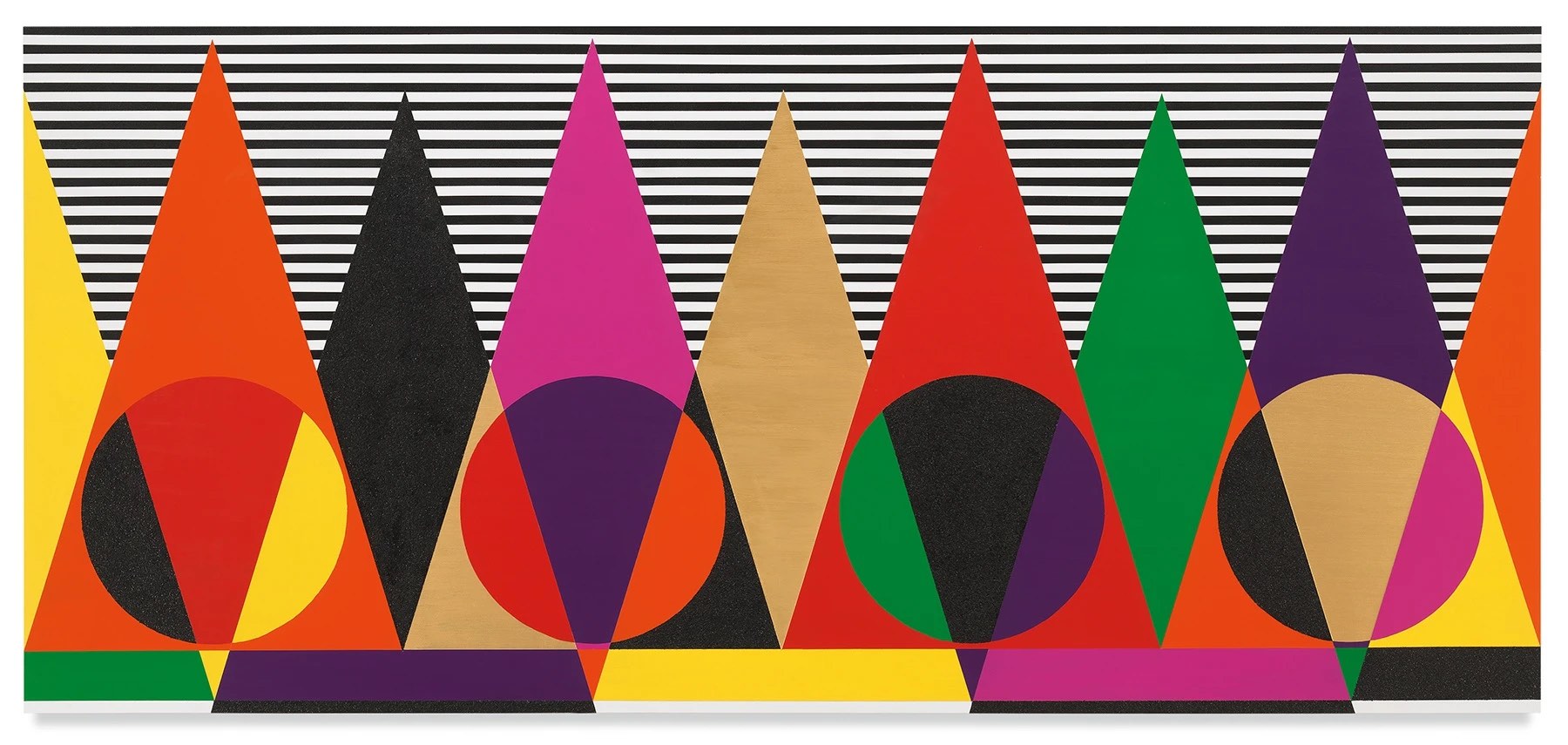
Rico Gatson, Untitled (Young Mystics), 2020. Acrylic and glitter on wood, 36 × 80 × 1 1/4 in. Purchased with funds given by anonymous donors. On view.
While our team’s research and review into WAM’s collection was ongoing, from 2021 - 2024, the museum put new accessions on hold. In 2025, a newly formed collections committee was convened, equipped with a fresh collection development plan and decision-making protocol. With this new guidance, WAM resumed adding a small selection of artworks, listed below, into the collection in the last fiscal year. By focusing on these key priority areas, along with the thoughtful stewardship and care of the collections we already hold, our goal is that WAM’s acquisition and collection refinement strategies are aligned with both our mission and the highest standards and practices in our field.
Recent Acquisitions

Courtney M. Leonard (Shinnecock Nation, born 1980)
BREACH Logbook #23 | Cull, 2023. Ceramic, paint, and video with audio, The Nancy and Warren MacKenzie Fund, 2024.1.1-3.

Chotsani Elaine Dean (American, born 1976)
Timeline Strip Pieced Quilt: for Frances Ellen Watkins, circa. 1857, precise exhibition of rhetoric, divine gifts of inquisition, mockery of law in a Calloway County Courthouse, 1855, poetry birthed by cruelty in and upon oceans, The Guinea Voyage, 2022. Stoneware, earthenware, and porcelain, The Nancy and Warren MacKenzie Fund, 2024.3.

Andrea Carlson (Grand Portage Ojibwe/European descent, born 1979)
Rolling Head, 2025. Screenprint on paper, Frances M. Norbeck Acquisition Fund, 2025.1.

Julie Buffalohead (Ponca Tribe of Oklahoma, born 1972)
The Ancient Ones, 2025. Lithograph on paper, Frances M. Norbeck Acquisition Fund, 2025.2.

Jeff Suina (Native American from Cochiti Pueblo, born 1972)
Cottonwood, 2024. Ceramic, The Nancy and Warren MacKenzie Fund, 2025.3.

Virgil Ortiz (Cochiti Pueblo, born 1969)
Tahu, Leader of the Blind Archers, 2024. Glazed raku ceramic, The Nancy and Warren MacKenzie Fund, 2024.2.
Additional Acquisitions:
Samuel English (Turtle Mountain Band of Chippewa Indians,1942-2023), Out Fish Netting, 2012. Watercolor on paper, Gift of Haley Greenfeather English, 2025.4.2.
Samuel English (Turtle Mountain Band of Chippewa Indians,1942-2023), Berry Pickers Pickin’, 2012. Watercolor on paper, Gift of Haley Greenfeather English, 2025.4.3.
Samuel English (Turtle Mountain Band of Chippewa Indians,1942-2023), They Like the Maple Sap, 2012
Watercolor on paper, Gift of Haley Greenfeather English, 2025.4.1.
Collection Spotlight — Virgil Ortiz
In May 2025, the Weisman unveiled a striking new work in the museum’s collection: Tahu: Leader of the Blind Archers, by groundbreaking Pueblo artist Virgil Ortiz. The monumental, glazed raku bust, on view in the museum’s Julie and Babe Davis Gallery, depicts Tahu, a leading character in Ortiz’s Pueblo Revolt 1680/2180 saga, reflecting Pueblo women’s strength, wisdom, and resilience.
In Ortiz's mythology, a young Tahu is challenged to an archery contest against a Castilian fighter. Unaware of Tahu’s extraordinary archery skills, he’s decisively defeated. Enraged by her unexpected upset victory, the Castilian troops retaliate and viciously blind Tahu and all the young girls in the pueblo, using heated swords to pierce their eyes. Unwilling to accept this unjust punishment, Tahu further hones her skills with a bow and arrow and recruits an army of blind archers. The archers relentlessly battle the invaders and drive them out, bolstered by Tahu’s cry: “You are no longer blind when you can see through your fear!”
Research Initiatives Within Public Engagement and Learning
At the Weisman, we like to think of ourselves as a “sticky place,” a site where ideas converge, hold, and expand through collective inquiry. Within the Public Engagement and Learning (PEL) department, we embrace this framework to ask what learning means in a century shaped by rapid technological change. As artificial intelligence reshapes higher education and transforms how knowledge is produced and shared, we ask: how can museums remain spaces where knowledge is not only transmitted but co-created, embodied, and shared across communities?
Research confirms what we see daily: slow looking, dialogue, and hands-on, imaginative engagement not only spark new neural pathways but also help individuals connect across differences. We believe that arts experiences are for everyone, and that WAM is uniquely positioned to create the conditions for that connection. Whether through a quiet moment in the galleries, a lively exchange in a public program, or the tactile process of making in the Open Studio, our work shows how art serves as both a personal resource and a collective catalyst. We are committed to fostering spaces where curiosity, care, and creativity guide us toward deeper understanding of ourselves, of each other, and of the world we share.
Spotlights
In the past two years, we’ve worked to reshape what were once separate public program and education departments into a cohesive ecosystem where learning and engagement actively build upon and enrich one another. The department now includes three full-time professional staff and more than ten rotating student scholars, both undergraduate and graduate, whose perspectives actively shape our evolving practice.
This restructuring signals WAM’s broader institutional commitment to being a teaching museum animated by care and experimentation. This approach has already fostered powerful interdisciplinary collaborations, most recently with the University’s medical school - through initiatives such as Imagination Studio, which investigates the cognitive effects of art engagement on mental health, and through visual literacy training for future clinicians (see WAM, Art, and Wellness below). These efforts advance a model of whole-person education, which emphasizes not only technical knowledge, but also empathy, cultural awareness, and the ability to manage through complexity.
Public Program Highlights
Dr. Gwendolyn DuBois Shaw: Winslow Homer, Blackness, and AI
At the Weisman, we see public programs as extensions of our role as a teaching museum, spaces where art sparks inquiry, dialogue, and reflection across differences. Rather than prescribing meaning, programs serve as invitations: to pause, to question, and to engage with the art, with one another, and with the pressing issues of our time.

The opening day of Kara Walker: Harper’s Pictorial History of the Civil War (Annotated) exemplified this layered, reflective approach. To mark the launch, WAM commissioned a performance by Monkeybear’s Harmolodic Workshop, a Twin Cities–based organization supporting Native, Black, and IPOC artists in puppetry and performance. Alumni Erica Warren, Johnathan Boyd, Luis Lopez, and Tim Blighton created three original shadow puppetry pieces in direct response to Walker’s art, with sound design by Atim Opoka. A post-performance talkback extended the exchange, offering insight into the artists’ creative process.
By commissioning Twin Cities artists to respond to Walker’s work, WAM rooted the exhibition in local perspectives and underscored how narratives of race, history, and power reverberate here at home. Their performances activated Walker’s visual language, situating it within contemporary struggles for representation, healing, and voice.

Later that day, WAM welcomed art historian Dr. Gwendolyn DuBois Shaw for a keynote lecture, Kara Walker, Winslow Homer, Blackness, & AI. A professor at the University of Pennsylvania, Dr. Shaw is a leading scholar of race, gender, and representation in American art. Her lecture traced the visual lineage of Civil War-era imagery through Winslow Homer and examined how Walker’s annotated prints reframe these histories with radical clarity. She also introduced a forward-looking lens, exploring how generative AI is reshaping the creation and circulation of images in contemporary culture, while connecting these shifts to speculative futures and Afrofuturist frameworks that imagine new possibilities for representation and cultural memory.
Paint & Listen with Christopher Harrison & Jo Jo Bell
As part of the Seeking for the Lost exhibition, WAM introduced a new participatory format: Paint & Listen, featuring visual artist Christopher Harrison in conversation with curator and UMN PhD candidate JoJo Bell. Rather than a conventional lecture, guests were invited to make artwork while listening to a live dialogue. As Harrison painted in real time, he reflected on his creative process, his archival research, the emotional weight of reimagining “Information Wanted” ads, and the legacy of the free Black press in post-reconstruction America.

The Paint & Listen format fostered a reflective atmosphere, allowing participants to process complex themes not only intellectually but also physically, through the act of making. Research in cognitive science and education shows that engaging the hands while listening can enhance comprehension, memory retention, and emotional integration.
This model reflects WAM’s broader commitment to embodied learning, evident in our Open Studio program, tour and workshop series, and collaborations with the University of Minnesota Medical School. Across these initiatives, we’ve found that hands-on participation fosters emotional attunement, builds resilience, and supports reflective practice. Paint & Listen extends this approach into public programming, offering visitors meaningful, personal pathways into art - and into the urgent questions it asks us to consider.
Open Studio
Creative Exploration Through Art and Dialogue
In our Open Studio, both students and the public unplug and engage in tactile, hands-on making, deepening connections to the ideas explored in the galleries and affirming the value of creativity as a shared practice.
The Open Studio program at the Weisman Art Museum invites visitors to slow down, reflect, and respond to art through hands-on, self-directed art-making. Rooted in inquiry-based learning and inclusive design, Open Studio deepens visitor engagement by offering activities that are thematically linked to the museum’s exhibitions, connecting personal reflection with larger social, cultural, and historical questions. Each project is designed to deepen engagement by inviting participants to respond to themes from the galleries through accessible, tactile experiences.

Highlight from Open Studio this year was Flower Stories, presented in conversation with the exhibition SEEN. Inspired by the collaborative garden created by artists Ronald “Bino” Greer II and Diane Willow, the activity invited visitors to craft sculptural flowers as symbols of healing, memory, and transformation. Over the course of the month, a community garden wall bloomed in the studio, growing into a collective expression of care and resilience.
Another featured activity, Laugh Lines, developed by Minneapolis-based artist Kameron White alongside Laughing Matter, invited participants to create their own comedic illustrations, exploring character development, humor, and timing as ways to reflect on personal and cultural identity. These activities exemplify the museum’s commitment to embodied learning and creative expression as essential tools for meaning-making.
In a digital age where meaning is often flattened by screens, Open Studio offers a tactile, human-centered alternative, a space where complex ideas can be explored through making. Looking ahead, WAM is expanding the program through a Teaching Artist model, bringing local artists into the studio to lead public-facing, exhibition-responsive workshops. This next phase will further enrich Open Studio as a platform for dialogue, reflection, and community-building.
Accessibility at WAM
At the Weisman Art Museum, accessibility is an evolving, values-driven practice grounded in equity and inclusive design. In late 2024, WAM closed out its IMLS-funded initiative Arts Access: Beyond the Senses, a transformative, multi-year project that resulted in a new, multi-layered approach to accessibility across exhibitions, programs, and public spaces.
This work was developed in collaboration with the University’s Disability Resource Center, Vision Loss Resources, CATSS, and a dedicated accessibility advisory committee, centering the lived experiences of visitors with sensory and cognitive disabilities. This resulted in the development of new interpretive strategies, verbal description protocols, training resources, and evaluation methods that continue to shape the museum’s offerings today.

Among the most visible outcomes of this work is the adaptation of CAPPTION, an NFC-enabled interpretive platform that allows visitors to access responsive, multilingual artwork information directly on their smartphones. CAPPTION adapts content to each user’s needs, automatically translating into over 130 languages, adjusting font size, and providing alt text and image descriptions. It also saves a history of scanned works for future reference. This tool embodies WAM’s belief in access through autonomy, giving every visitor the ability to determine how they engage with exhibitions.

To support visitors with sensory sensitivities and cognitive processing needs, WAM also offers sensory bags stocked with headphones, visual timers, fidget items, and other tools for emotional regulation. A downloadable social narrative, complete with photos and wayfinding details, helps prepare guests for the museum environment before they arrive.
Together, these efforts reflect WAM’s deeper institutional shift: from accessibility as accommodation to accessibility as co-creation. Informed by community insight and ongoing collaboration, the museum’s approach continues to expand what inclusive, multisensory museum experiences can, and should be.
WAM, Art, and Wellness
Integrating Care, Creativity, and Curriculum
The Weisman Art Museum’s growing portfolio of art and wellness initiatives reflects a powerful belief: that art can be a conduit for healing, reflection, and transformation. As conversations around mental health and care infrastructure become increasingly urgent, WAM is investing in programs that explore how creativity can support emotional resilience, deepen empathy, and enrich clinical training.
At the heart of this work are core collaborations with faculty from across the University of Minnesota Medical School. WAM’s educators regularly lead future clinicians, from fields including palliative care, pharmacy, internal medicine, and beyond, through the galleries as part of structured workshops designed to hone observational acuity, inquiry-based discussion, and reflective thinking. These experiences encourage students to lean into ambiguity, develop emotional attunement, and consider the complexity of human experience; skills that are essential to compassionate, patient-centered care. Within these sessions, the artwork becomes a mirror, a metaphor, and a method, positioning the museum as an extension of the clinical classroom.

This past year also marked the continuation of Imagination Studio, an interdisciplinary, research-based program designed to support youth experiencing anxiety and depression. Developed in partnership with Dr. Katie Cullen, artist Yuko Taniguchi, and the Masonic Institute for the Developing Brain, the program integrates creative expression with clinical research to examine the impact of arts engagement on mental health and well-being. Participants explore both inner emotional landscapes and lived experiences through a series of creative modalities, led by a cohort of teaching artists. The study has shown measurable positive shifts, supported by self-reported assessments and neurological data collected through MRI scans.

WAM is also a key partner in the Becoming a Doctor series, an integrated, longitudinal course that is part of the Center for the Art of Medicine (CFAM). CFAM works to elevate the role of the arts and humanities in medical education by nurturing curiosity, fostering resilience, and promoting professionalism among physicians and physicians-in-training. Looking ahead, WAM’s Public Engagement and Learning team will host co-teach a Visual Art + Medicine course in Spring 2026 as part of the Becoming a Teacher series. This course will draw directly on insights from both Imagination Studio and the museum’s inquiry-based approaches to visual analysis and reflective practice.
Community Collaborations
Overview
The Weisman partners with local organizations and artists, campus departments and student groups, several times per year to present special events, talks, and performances through the museum’s cosponsorship program. By waiving venue rental fees and donating in-kind staff and promotional support, cosponsorships ensure fewer barriers for our communities to access both the platform and reach of WAM, inviting new audiences and community-led programming into the museum.

Dia de los Muertos x Centro Tyrone Guzman
For Dia de los Muertos, WAM partnered with Centro Tyrone Guzman, a nonprofit in South Minneapolis that has helped Latine immigrants in Minnesota thrive for 50 years, to host a celebration and community ofrenda, created by altarista Monica Vega. More than 300 community members gathered at WAM to honor the holiday with hot chocolate and conchas, art-making and remembrance, adding mementos of their own beloved ancestors to a sprawling ofrenda situated in the Riverview Gallery.
Rocking Chair (Re)Evolution x Amoke Kubat

In the spring, WAM cosponsored a program with Northside Minneapolis artist, writer, and community space-maker Amoke Kubat: Rocking Chair (Re)Evolution, a multicultural, community-engaged project to celebrate the art of mothering — a vital yet undervalued role encompassing the care of children, families, and vulnerable populations across all stages of life. Highlighting the visible and invisible labor of mothers worldwide, the initiative calls for recognition of the relentless, 24/7 work of caretaking, often burdened by poverty and lack of resources. Twenty-four rocking chairs, all made by local artists — mothers, grandmothers, aunties — were installed in WAM’s Riverview Gallery. The rocking chairs stood in as symbols for care, relaxation, connection, and even resistance — not just for mothers but also for those aging, disabled, or simply seeking comfort.
Kubat’s cosponsored project culminated in a public ceremony and reception at WAM on March 30, gifting the finished chairs to select local mothers and featuring a debut performance by the Rocking Chair (Re)Evolution Lullaby Orchestra. The event brought together mothers, grandmothers, families, and friends in a celebration of mothering as a pathway of love and transformation.
In an interview with Minnesota Public Radio, musician Emily Youngdahl Wright says,
“The whole project itself is just such a beautiful example of thinking about the questions: What kind of rest do you need, and what kind of support do you need? The chairs remind us that [caregiving work] doesn’t really end when you’re a parent and when you’re a grandparent — when you are tending to this world that is in so much need of tending right now.”
Bad Africans x Gender & Sexuality Center for Queer and Trans Life

WAM collaborated with University of Minnesota’s Gender & Sexuality Center for Queer & Trans Life to present Bad Africans in April 2025, in honor of the Trans Day of Visibility. This play follows the story of a young African influencer, and their struggle to go (and find) home. Performed by organizer and playwright Ibimina Dominique Thompson and followed by a panel conversation with guest artist N'Yomi Stewart, this multimedia ode to African queerness in the black diaspora situates afrocentric queer forms of expression as fine art, through a Gen-Z lens.
Student leadership at WAM: WAM Collective & Student Guides
The PEL team presents public programs and artist workshops, integrates curriculum with faculty across disciplines, and hosts K–12 audiences, supporting teachers in using the arts as tools for creativity, inquiry, and critical thinking. Through student-centered initiatives such as the WAM Collective program board and the Student Guide program, students become leaders and co-creators, shaping exhibitions, guiding events, and informing the museum’s strategies. By drawing on their own disciplinary perspectives and research, they expand how the museum engages with art and its audiences.
WAM Student Guides: Building Visual Literacy Through Student Leadership
The WAM Student Guide program reflects a significant shift in how the museum approaches in-gallery teaching. Once a volunteer docent program, it has evolved into a paid student leadership opportunity that expands access and creates meaningful learning experiences for University of Minnesota undergraduates and graduate students from a variety of disciplinary perspectives.

Led by Ricki Williams, WAM’s Public Engagement and Learning Coordinator, the student guide program emphasizes inquiry-based learning, contextual depth, and active engagement in the galleries. Drawing on her background in cultural curation and classroom teaching, Williams has shaped a pedagogy that is welcoming, rigorous, and responsive. Student guides are positioned as both interpreters and facilitators, equipping them to lead conversations that spark curiosity, critical thinking, and personal connection with the art on view.
Inquiry-based tours at the Weisman invite visitors to take a closer look at the artwork on view. Guides create interactive experiences that challenge the idea of “right” and “wrong” ways to engage with art. Tours reflect the research interests of student guides as well as the needs of each visiting group. The museum offers two types of tour experiences: guided tours, led by student guides or staff, typically lasting 60–90 minutes depending on group participation; and self-guided tours, available during open hours, which use printed booklets to lead reflection around six works of art. Tour formats can also be adapted with workshops or activities for a more hands-on experience.
Visitors can book inquiry-based tours through the museum’s new booking platform.
WAM Collective: Student-Driven Engagement and Campus Connection
The WAM Collective is the Weisman Art Museum’s student leadership group, composed of five student officers who act as the creative and strategic bridge between the museum and the University of Minnesota’s broader student body. Registered through Student Unions and Activities as an official campus life program, the Collective provides a platform for students to explore contemporary museum practices, develop public programs, and design initiatives that invite their peers into deeper engagement with the museum’s exhibitions, spaces, and resources.

The group is guided by Joy Scanlon, WAM’s new Campus Engagement Manager, whose background as a practicing artist, gallery manager, and museum educator brings a unique blend of perspectives to the role. Under her leadership, the WAM Collective considers the evolving role of the museum within a university setting, asking bold questions about relevance, inclusion, and how art can animate student life.
WAM Collective’s work is wide-ranging: they produce large scale open house events, host study nights that transform the museum into a student-centered gathering space, table across campus to connect with peers, collaborate with other student groups, and create resources such as zines that expand and nuance the museum’s practices. Through peer-to-peer programming, creative experimentation, and an emphasis on student agency, the Collective does more than make space for students—it empowers them to shape what that space can become, ensuring the museum remains responsive to the ideas and energies of its student community.
Truth & Repair at WAM: Native American Artist-in-Residence Program
In a cultural landscape still reckoning with the consequences of colonial erasure, the Native American Artist-in-Residence (NA AiR) program at the Weisman Art Museum is an intentional commitment to centering Indigenous presence and epistemologies. Developed through extended consultation with Native artists, scholars, and cultural leaders - and supported by the Institute of Museum and Library Services, the program is part of WAM’s broader Truth & Repair initiative, which is presented in step with the museum’s repatriation efforts. This framework prioritizes historical accuracy, cultural accountability, and reparative action.

After a national search, Cliff Fragua (Jemez Pueblo) was selected as the museum’s 2025 - 2026 artist-in-residence. A master sculptor whose work is rooted in Pueblo spirituality, politics, and land-based traditions, Fragua brings to the residency both an ancestral vocabulary and a contemporary urgency. His project, Stone Pots of Sovereignty, will explore four interrelated domains: Seed Sovereignty, Water Sovereignty, Data Sovereignty, and Self-Determination.
Rather than functioning as a traditional commission, this residency centers process, relationship, and critical inquiry. Fragua will conduct research across the Upper Midwest and engage in conversation with the MniSota Native community, inviting shared reflection on what sovereignty looks like today - across landscapes, materials, and generations. Fragua notes:
“The pots I plan to create are more than objects, they are vessels for dialogue, for memory, and for repair.”
Fragua’s work will culminate in an exhibition (August 2027 - May 2028), guest curated by Juan Lucero (Pueblo of Isleta), which will place his new work in nuanced dialogue with WAM’s collection, contrasting Pueblo Indigenous ways of knowing with Western ideas of progress.
By the Numbers


Financials
The Weisman's operating budget for FY25 was approximately $4.6 million. Where did those resources come from? How did the museum spend these dollars, area by area, to deliver on our mission? We’ve included charts to represent WAM's fund sources as well as how our budget was deployed across the museum's various areas of work. Note: Administrative costs noted in the chart include the percentage which the Weisman puts back into the U of M cost pool for shared services like human resources, IT, accounting, etc.
Find official University of Minnesota Financials here.
Thank You WAM Donors and Funders
Your support is the reason the Weisman can offer free admission, innovative exhibitions, and inclusive public programs. To all of our donors and funders, thank you for believing in the power of art.
List reflects gifts received between July 1, 2024 and June 30, 2025.
$0-999
Elvira Aballi Morell
Jon Aery
Anonymous Donor
Dr. Howard Ansel
Steven F. & Nancy J. Apfelbacher
Thomas J. Arneson
Amanda K. Bartschenfeld
Kayla Bassett
Mary K. Baumann & William P. Hopkins
Carol V. & Judson Bemis, Jr.
Kathleen V. Bennett
Dominique F. & David A. Bereiter
Berry Global
Brent J. & Deborah Bertsch
John Birge & Shannon R. Olson
Robert B. Bitzan
Robert & Gail Blake
Aaron Blom
George Bradshaw & Lee Bowen
Pamela A. Bransford
Karen Brown & Marc Schiappacasse
Robert H. Bruininks and Susan A. Hagstrum
Philip C. & Carolyn J. Brunelle
Eliud Cano
Andrea S. Canter
Kyle Cantor
Lisa & Jonathan Carver
Shree Chauhan
Alessandra Chiareli
Marilyn J. Chiat
Charlotte W. Cohn
Page & Jay Cowles
C. Mayeron Cowles & C. F. Cowles
Ruth Hanold Crane & Douglas A. Crane
Steven Czyrny
Kathleen M. Daniels
Prodromos Daoutidis & Aphrodite Hitzidou
Jennifer R. David
Elizabeth B. Dodson
William T. Dolan & Jane E. Tilka
Janet M. Dubinsky
Matthew Edwards
Noah & Susan Eisenberg
Jessica Evjen
David Fettig & Nancy Baldrica
Rebecca L. Fillinger
Sally G. Fisher
Frank & Frances Wilkinson Foundation
Suzanne Gagnon
Helen Gamble
Stephen E. Gangstead
Xin Gao
Elizabeth Giffin
Matthew J. Glover
Keith C. Granzin
Maria C. Grifoni
Dr. Jon S. & Diane M. Hallberg
Cherie Y. Hamilton
James H. and Mary Ball Hammill
Walter Handschin
Annette Hansen
John D. & Lydia M. Haugen
Nan L. Heffken
Emily B. Helms
Dale J. & Linda D. Herron
Beverly Hlavac
Gregory P. Hodapp & Merwood "Woody" B. Olsen
Carol R. Horswill
William S. Huff Towle
Brian Hylbert
Nancy B. Hylden & Peter J. McLaughlin
Joshua Jagoe
Kara Jeter
Richard W. Johnson & Mary E. Kalish-Johnson
Richard Y. Kain & Katherine S. Frank
Joseph Kang
Diane Katsiaficas
Sandy Kaul
Janet P. & Markus A. Keel
Jonathan Kent
Joanne Kieffer
Lyndel & Blaine King
Edward F. & Judith A. Kishel, Jr.
David B. & Vesna Kittelson
Martha M. & Michael F. Koch
Suzanne E. Kosmalski
Kyad Foundation
Maria B. Labhard
Anne Landreman & Thomas R. Meersman
Colles B. Larkin
Marlene J. Lawson
Adam F. Lehocky
Kathleen & Allen Lenzmeier
Carol F. Lichterman
Joanne H. Linder
Michael J. Linnemann & Emily M. Gage
Martin L. and Marilyn B. Lipschultz
Timothy P. Lodge & Susanna Amelar Lodge
Sarah Logan
Gregory K. Maltby
Joelle C. Marchio
Melissa Markay
Todd Maxwell
Dennis & Jerry H. McClelland
Patricia J. McDonnell
Medtronic and Medtronic Foundation
Jennings G. Mergenthal
Robert & Mary Messner
Gordon E. Meyers & Julie M. Seiler
David J. Miller
Herman J. Milligan & Constance L. Osterbaan
Mary M. & Jean-Alex E. Molina
Michael Morala
Laura F. & Philipp Muessig
Diane A. Mullin
Kyle Ness
Joe Olsen
Jill Osvog
Douglas Padilla & Susan B. Jacobsen
Mary Ann & Richard Pedtke
Linnea L. & Stephen A. Peterson
Michele Pierce
Lynn A. Raarup & Allan L. Lavalier
Kenneth E. Redd
Debra Reischl
Christine E. Retkwa
Jorge Reyes
Julia Williams Robinson
Cynthia C. & William M. Rohde, Jr.
Nancy L. Rosenberg
Gregory T. Roth
Jennifer Roth
Vanessa A. Rousseau & Paul Buharin
Joseph Rubin
Beth D. & Mark A. Saliterman
Brian Sanders
Martin H. Schub & Anne E. Bertram
Mark R Schultz
Arun Seshadri
Jan & Alan Sickbert
Robert B. Silberman
Carla C. Skjong
Graham Smith
William E. Smith
Sherwood Snyder
Karen E. Stauss
Claire Steyaert
Tiffany Stone
Gwen K. Sutter
Craig & Janet Swan
Nina K. & Michael F. Sweeney
Mengxuan Tang
Ravi Tenkayala
Eileen E Thomas & M Ann Milbrandt
Jane E. Thomson
Patricia M. & Carl E. Vaurio
William D. Venne & Douglas Kline
Lois Walter
Ann B. Waltner & Robert R. Anholt
David C. Warner
Emily Watton
Katherine Waymire
Gabriel P. & Yvonne Weisberg
Donna M. Weispfenning & Robert K. Groger
Jason Welch
Reid Westburg
Susan L. & James D. Westerman
Amelious N. Whyte
Christy Willis
Emily Huemann Xiong
James E. Young & Carol A. Marchel
Mahmood A Zaidi
Paul Zemanek
Jack G. Zouber
Suzanne M. Zuidema & Jack Jenkins
$1,000-9,999
Paul L. Acito
Karen O. Bachman
Bruce J. & Harriet J. Bart
Jane M. Blocker & Roger O. Lindsay
Joseph Brown
Cy and Paula DeCosse
Mary Anne Ebert & Paul R. Stembler
Gayle Fuguitt & Thomas P. Veitch
Daniel R. Gjelten & Lisa K. Burke
Diane T. and Anthony A. Hofstede
Hulda and Maurice Rothschild Foundation
Heather F. & Matthew A. Hunt
IFPDA Foundation
The James Ford Bell Foundation and Trust
Sara S. Janz
Sungsook* & Kwonshik Dennis Kim
Daniel & Constance Kunin
Edith D. Leyasmeyer
Daniel T.* & Helen E. Lindsay
Lisa R. & Brian J. Lukis
Sergio E. Manancero & Shelby Couch
Jennifer L. Martin
Hannah Rose McNeely
James & Sheila Moar
Leni & David Moore, Jr.
Eric A. Newman & Janice I. Gepner
Amanda J. & Ruben M. Nusz
Tammie S. and Philip M. Rosenbloom
James W. Rustad* and Dr. Kathryn A. Thomas
Shirin Saadat
Soar Foundation
Steven J. Thompson & Ronald L. Frey
Robin Torgerson
Stephanie Cain Van D'Elden
Kirtland C. & Nicole M. Woodhouse, Woodhouse Family Foundation
$10,000+
Ameriprise Financial Inc
Janet J. & Gary A. Christenson
Joann Fink
Cynthia A. & Jay V. Ihlenfeld
Kevin, Rosemary, and Hannah Rose McNeely, KHR McNeely Family Foundation
Lisa Lehn O'Brien and E. Gerald O'Brien
Daniel L. McFadden and Beverlee T. Simboli
Corey D. Sauer
The Edward R. Bazinet Charitable Foundation
Thomas Barry Fine Arts
*Deceased
In addition to individuals, private foundations, and corporations, the Weisman also received support from the Minnesota State Arts Board. This activity is made possible by the voters of Minnesota through a Minnesota State Arts Board Operating Support grant, thanks to a legislative appropriation from the arts and cultural heritage fund.
Other funding**
$10,000+
Andy Warhol Foundation for the Visual Arts
Art Dealers Association of America Foundation
Helen Frankenthaler Foundation
HRK Foundation
Institute for Museum and Library Sciences
National Endowment for the Arts
Terra Foundation for American Art
**This list represents grants which were awarded during previous fiscal years but supported projects that occurred or were ongoing during the 2024-25 fiscal year.
Paul Acito
CEO, Lyftbridge
Bridget Anderson
WAM Collective | Student
Colene Blank
Vice President and Associate Chief IP Counsel, 3M Innovative Properties Co.
Jane Blocker
Professor, Art History, University of Minnesota
Prasad Boradkar
Dean, College of Design, University of Minnesota
Anika Byrne
WAM Collective | Student
Gary Christenson
Former Chief Medical Officer, Boynton Health, University of Minnesota (retired)
Dan Gjelten
Writer and Community Volunteer
Aphrodite Hitzidou
Community Volunteer
Cindy Ihlenfeld
Artist & Community Volunteer
Sara Janz
Ameriprise
Dennis Kim
President, EVS Engineering
Dwight Lewis
Assistant Professor of Philosophy, University of Minnesota
Sergio Manancero
President & Taproom Manager at La Doña Brewing
Jennings Mergenthal
Community Engagement Specialist, Science Museum of Minnesota
Herman Milligan
Managing Partner, The Fulton Group LLC
Eric Newman
Professor, Department of Neuroscience, Distinguished McKnight University Professor, University of Minnesota
Phil Rosenbloom
Artist
Shirin Saadat
Community Volunteer | Chair
Eun-Kyung Suh
Professor of Art and Design, University of Minnesota Duluth
Kay Thomas
International Education Administrator and Consultant
Amelious Whyte
Interim Director, Diversity, Equity and Inclusion, College of Liberal Arts, University of Minnesota
Penny Winton (Lifetime Member)
Community Volunteer